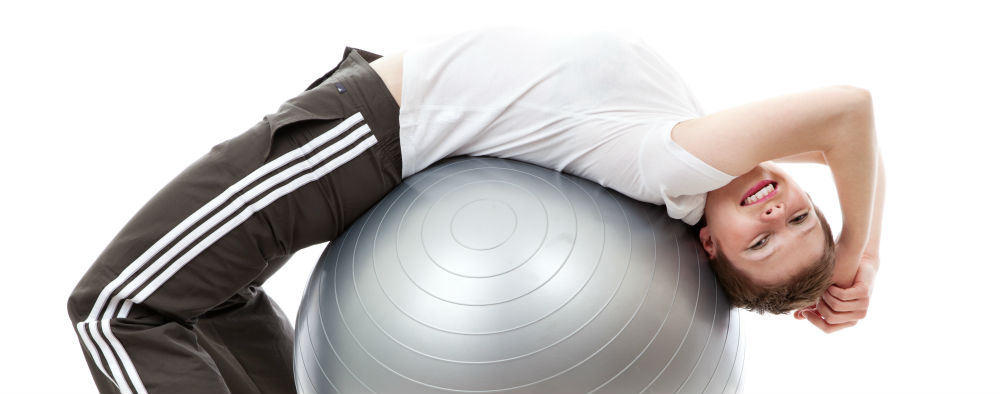
The Power of Pilates

An estimated 6 million people across the country are now strengthening their bodies and minds, and losing weight, with the help of pilates exercises, the fastest growing fitness trend in decades. Among the Hollywood celebrities publicly touting its benefits, Goldie Hawn, Candace Bergen, Brad Pitt, Ben Afleck and Matthew Broderick.

Thanks to the Method’s popularity, a growing industry has emerged. More than 11 thousand people in the U.S. now claim to be pilates instructors, but according to the Pilates Method Alliance, (PMA), the international, not–for–profit, professional association that establishes certification and continuing education standards for Pilates professionals, at least 25 percent of them have not been properly trained.

“If you are working with an instructor who doesn’t have adequate training, you run an incredible risk of getting hurt,” says Kevin Bowen, co-founder of the PMA. “Pilates isn’t something you just start doing one day. You have to make sure you have an instructor who understands the Method and how to make the exercises work for you.”

If done correctly, pilates exercises strengthen, tone and stretch the body, encourage proper breathing and facilitate good posture. Here are 10 important questions you should ask an instructor before signing up for their class:

#1 What kind of training did you go through and where?

#2 How much time was spent in your original training?

#3 How long have you been teaching?

#4 Did you only learn the mat work or was your program comprehensive in nature, teaching you pilates exercises on the pilates equipment? #5 Do you understand the body, have basic knowledge of kinesiology and understand fundamental biomechanics?

#6 Do you understand the aging process?

#7 Do you pay close attention to safety and guidelines?

#8 Does the facility where you teach practice safety standards for group classes?

# 9 Do you have a commitment to continuing education?

#10 Are you affiliated with a professional organization like the Pilates Method Alliance?

For help finding a pilates studio or instructor in your area, who is likely to answer these questions to your satisfaction, log onto the Pilates Method Alliance Web site at www.pilatesmethodalliance.org. Click on the link on the left hand side that says “Finding a Teacher.” That will take you to a page with a link to a searchable database.

Courtesy of ARA Content

30 minute fitness workout

Being fit is fantastic. You look gorgeous and even more importantly, you feel it. But getting there can be, shall we say, a miserable slog although deep down we all know it’s worth it. And if you stick with it, it gets easier and you might even come to love it.
So how exactly do we get to that stage? the first trick is not to think about it too much.
People get bogged down with the detail,After a break from training, effective fitness regimes are best kept simple – do it regularly, work your major muscle groups (legs, back and chest) and push yourself. You can’t expect to get any results, let alone great results, if you don’t break a sweat and get your heart rate up.
One way to keep it simple and get a great overall workout is with circuit training. Circuit training is based on a series of exercise “stations” and can be done in the park, at home or at the gym. The best circuits have stations that are divided into two groups of moves.
First there are the weight-bearing stations, which target upper and lower body muscles. Then there are the cardiovascular stations, which condition your heart and lungs. The idea is you move directly from station to station.
At each one you’re required to work up a sweat for roughly 30 to 40 seconds.
It might sound like a major effort, but circuits are so quick-moving that you’ll forget all about the sweat and focus purely on the fun. Now, let’s get cracking.

why circuits work

Circuits are fantastic because they use lots of movements. This means you’ll work several muscle groups at once, while pushing your balance and coordination. And you’ll be zipping from one circuit station to the next so your heart rate will stay up.
Add this total body workout to your regular power walk, jog or cycle and you’ll soon notice major improvements in both body shape and tone. Why?
Because it includes some of the most effective weight-bearing and cardiovascular exercises around. Aim to go through the circuit twice, then build up to three or four times.
You need to do this three to four times a week, with at least one day’s rest between workouts, particularly when starting out. Perform the nominated number of repetitions for each exercise in the order listed and move quickly between stations, preferably with no more than 20 to 30 seconds rest. This circuit doesn’t need any training equipment. To progress, add more stations or repetitions.
NB: Do a light stretch beforehand for five minutes. For the cool down, repeat and hold stretches for 20 to 30 seconds.

1. squats

Standing with your feet shoulder-width apart, contract and pull your abs in so that your tailbone points to the floor and your spine is in a neutral position.
Keep the chest proud, neck long, shoulders back and down. With your weight towards the heels, bend your knees and lower into a squat.
Point your toes either straight ahead or turn them out slightly, making sure your knees are pointing in the same direction. Allow your arms to move forward to help counter balance you, then stand up.
Do 20 repetitions.
• Strengthens quadriceps, hamstrings, buttocks and lower back.

2. push-ups

Kneel on the ground on all fours with your hands slightly wider than your shoulders.
Bring your hips down until your back is straight and brace your abs. From here, lower yourself by bending your elbows out to the side and stop about five to 10cm off the ground. Think posture, long spine, shoulders pulled back, chest out, and no rounded backs. Push up through the heel of your hands. Do 15 repetitions. The advanced version is to rest on your toes.
• Strengthens chest, front shoulders, triceps, abdominals and spine extensors (muscles along spine).

3. ski jumps

Find a line in the grass or draw an imaginary line. With your feet shoulder width apart, jump from side to side.
Be sure to land softly, knees and toes pointing straight ahead. This one is tough. Time yourself for one minute or do 60 reps, trying not to stop. Need motivation? Picture those jiggly bits melting away.
• Improves fitness, strengthens heart and works on agility and balance.

4. backward stepping lunges

Stand with your feet shoulder-width apart, tall posture, chest lifted, shoulders back and imagine you’re standing on two railway lines. Step backward onto the ball of your foot, maintaining the line of the track.You will need to step far enough back to allow both legs to form two perfect right angles, keeping the back heel lifted. Avoid tipping forward or looking down, fix your gaze on the horizon instead, and imagine you’re balancing a water bottle on your head.
Keep your tailbone under your head. Push up and return to the standing position and switch legs. Do 20 alternating lunges.
• Strengthens buttocks, quadriceps, hamstrings, core stability and balance.

5. step-ups

Using a small step, step up and down quickly. Lead with one leg 20 times, then switch. Always think posture. This means long straight torso, shoulders back and down, and abs pulled in. Check your knees and toes are pointing straight ahead, and be light on your feet.
• Increases fitness level, raises core temperature, strengthens buttocks, quadriceps and hamstrings.

suit yourself

• Tailor your circuits to suit your needs or to keep things interesting. Circuit A could include leg training and cardio stations, Circuit B mainly cardio stations, Circuit C all upper body stations with a few cardio stations, and Circuit D everything.
And remember, it’s important to be working for at least 30 minutes.
Perspiration is the key.
A good guide is how much huffing and puffing you’re doing.We’re definitely looking for some heavy breathing. If you’re not working with intensity you won’t get the results you deserve.
two is better than one
• Circuit training is always more fun and motivating when you’re training with someone else. Try getting some workmates to exercise with you, or maybe some family members.
Having two people or more also increases the amount of things you can do, for example, tag team push-ups could be another station or perhaps a running relay.
You can keep each other motivated and brainstorm new activities.

Strength Training Is For Every Body

A visit to your local health club weight room will reveal a space filled with dazzling steel and chrome machines. Not long ago, these modern-day “torture chambers” were places for dedicated body builders, mostly of the male gender who had very little body fat and a whole lot of rather large, hard-to-miss muscles. There was a distinct aura to that room, a feeling of raw power and intimidation. The moment you entered, something told you to get out quickly – you didn’t belong there.

Not so today. Although the appearance of weight rooms today has remained somewhat the same, the game has changed and so have the players. Where once only getting “bigger muscles” was the goal of strength training and mostly men participated in the routine; today, women and men alike; young and old; thin and fat; healthy and not so healthy are finding their way into weight rooms and realizing the magic of strength training – beyond simply achieving a beautiful body.

Why all the sudden fuss about strength training? It’s really quite simple. Fitness experts have finally realized that there’s more to being “fit” than just cardiovascular strength. Muscle strength is an equally important component to overall health and fitness. According to Dr. Michael Pollock, chairman of the American College of Sports Medicine’s position paper on exercise guidelines, “With society living long and longer, it makes sense to keep people functionally capable and independent.” Strength training is a means to achieving this end.

Although physical appearance is certainly a plus that comes with strength training as well as a motivation factor for a great number of people, “physique perks” are not the primary goal of strength training participants. There are three additional reasons every body can benefit from strength training, regardless of age.

MAINTAIN AND/OR ENHANCE LEAN MUSCLE WEIGHT
It’s a fact. You will lose 1/2 pound of muscle for every year you age past 20, if you do not incorporate some type of resistance strength training into your exercise routine. Think about that for a moment. That means if you weighed 120 pounds at the age of 20 and you weigh 120 pounds now at the age of 40, you’ve replaced 10 lbs of muscle with 10 lbs of fat, even though your weight is exactly the same. Pretty shocking isn’t it?

We all recognize the health risks associated with excess body fat, but did you know that muscle actually burns more calories than fat? That’s right, one extra pound of muscle will burn 50 more calories a day, just at rest. On the other hand, every pound of muscle you lose will burn 50 less calories a day.

This may explain why you were able to eat more when you were young. And, since muscle is denser than fat and takes up less space (even though you weigh the same), your body doesn’t quite look the same and that size 8 is now a size 12.

Aerobic exercise will help burn the excess fat, but cannot delay the natural diminishing in overall body muscle tissue associated with the aging process. There are no magic pills or treatments…strength training is the only cure.

INJURY PREVENTION AND INCREASED CAPACITY
Skeletal muscles are the major shock absorbers of your body. Some of these muscles work up to 24 hours a day, such as the ones that help maintain your posture as you stand or sit. Muscles help protect your bones and joints every
time you take a step or dance during Jazzercise participation. lt’s easy to see how strengthening your major muscle groups (i.e., the shoulders, arms, legs, back, and abdominals), will diminish the stress of impact forces and lessen the
risk of exercise-related injury.

Strong muscles also help one to perform daily tasks with ease and efficiency. Activities such as climbing stairs, gelling out of bed, lifting groceries and children, cleaning the house and mowing the lawn all become easier to perform.

PREVENTION OF OSTEOPOROSIS
Although strength training cannot turn back the clock on osteoporosis once you have it, recent research indicates that regular strength training can help to maintain bone mass and reduce a woman’s risk of developing osteoporosis.

There you have it – three excellent reasons to start some type of resistance strength training. What does it take to get those muscles in shape? Not as much as you may think. You can choose from a variety of resistance equipment. There
are weight machines, free-weight dumbbells, wrist/ankle weights, bands, balls, or even your own body weight with calisthenics. Naturally, your fitness level and goals will dictate what type of equipment is best for you.

In terms of recommended training routines…if you ask ten different experts, you’re likely to get ten different answers. There are numerous routines for increasing strength depending on your specific goals. Working out “hard” and “long” may elicit greater improvement in strength, but it also increases your risk of injury. So why not take a sensible,
yet effective approach.

After years of research, here’s what the experts have found:

  • Frequency of training: Minimum of two times per week.
  • Number of Repetitions: 8-12 per set
  • Number of Sets: Minimum of one set per muscle group.
  • Number of Exercises: 8-10 exercises which focus on the major muscle groups.
  • Movement Speed: Slow to Moderate
  • Amount of Weight: Enough to fatigue your muscles by the last few reps. (8-12 reps for strength training, 15-20 reps for endurance training.)

Isn’t it great! You don’t have to spend hours in the gym to significantly improve your strength. You can be in and out in as little as 20 minutes. Now, that’s a schedule we all can live with!

Remember, you don’t have to be in perfect shape to work with weights. Strength training is now considered an important component of a weight loss program;  along with diet, aerobic exercise, behavior modification, and is recommended for people suffering from certain types of arthritis and chronic back pain. Once believed dangerous for the elderly, research has confirmed that a low to moderate resistance strength training program is safe for the older population and people with high blood pressure or heart disease. Of course, if you happen to be one of those people in less than perfect shape, be sure to get your doctor’s “OK” before you start lifting away!

What are you waiting for? Now’s the time to turn your body into a strong and efficient, lean and mean calorie-burning machine. Strength training is for every body…start your program today!